Skip navigation



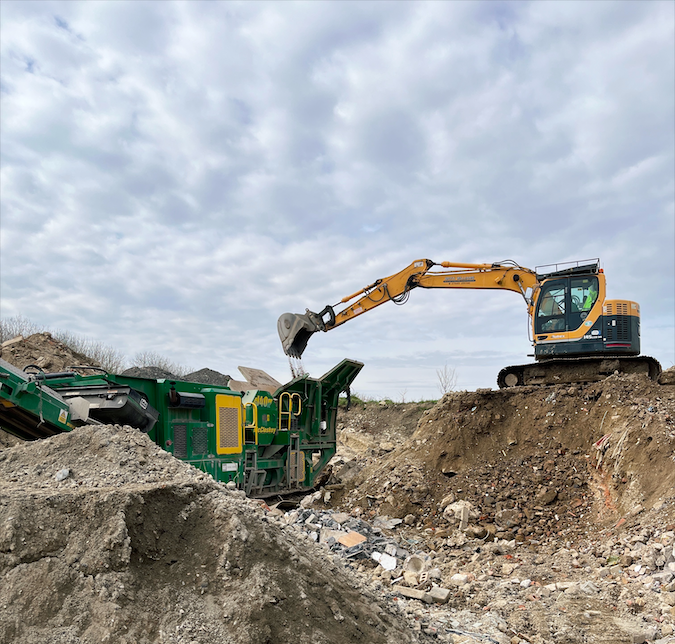
Construction sites produce huge amounts of waste. Concrete from demolished buildings, broken brickwork and old asphalt often leave site in skips or lorries and head straight for landfill. In recent years, this approach has started to change.
More contractors are now choosing to reuse those materials. Through crushing and screening, concrete and other demolition waste can be processed into usable aggregates for new construction work. Materials such as recycled concrete, hardcore and road planings are now commonly used for sub bases, access tracks, and hardstanding.
This shift isn’t just about reducing waste. These materials are often more affordable than newly quarried stone and are widely available through local recycling yards. As construction continues to look for more sustainable ways to build, they are steadily growing in popularity.
In this article, we look at why recycled aggregates are being used more often across the industry and where they are typically applied.
What are recycled aggregates?
Recycled aggregates are construction materials that are recovered and repurposed for use from a previous project. Instead of extracting fresh stone from a quarry, existing materials are collected, processed, and prepared for use on a new project.
At recycling yards, incoming material is sorted, crushed and screened to produce different aggregate sizes. This process removes unsuitable material and creates consistent grades that can be used across a range of applications on site.
Common examples include crushed concrete, recycled hardcore made from mixed masonry, and road planings from resurfacing works.
In practical terms, these materials perform the same role as many primary aggregates. They provide stable layers that support surfaces, structures and groundwork across many different types of projects.
Why the construction industry is moving towards recycled materials
Construction has been under growing pressure to deal with waste more responsibly. Large demolition and redevelopment projects can generate significant volumes of waste and sending it all to landfill is no longer justifiable from a cost and environmental perspective. Reprocessing these materials allows them to stay in circulation within the construction industry rather than leaving it as waste. This shift has also been influenced by planning policies and sustainability targets, which increasingly encourage developments to reduce waste and make better use of existing materials.
Alongside these changes, recycled aggregates offer several benefits that are helping to reshape how materials are sourced and reused across the industry.
Accessibility:
One of the reasons that secondary aggregates are widely used is availability. Construction and demolition work produces large volumes of material that can be processed and reused, which means recycling yards often have a steady supply ready for collection or delivery.
For contractors working locally, this can make sourcing materials more straightforward. Recycling facilities are often located close to towns and development areas, allowing aggregates to be delivered quickly to site without long lead times.
Versatility:
Recycled aggregates are used across many different types of construction work. Their most common role is within sub base layers, but they also appear in a range of other supporting applications.
They’re often used for access roads, hardstanding, temporary tracks, piling mats and general fill. In landscaping projects, they can also be used beneath patios, paths, and driveways. This flexibility means the same materials can often be used across several stages of a project.
Affordability:
Cost is another factor that makes recycled materials an attractive option for many projects. Because the raw material already exists within the construction cycle, processing it into usable aggregate can often be more cost effective than extracting and transporting newly quarried stone.
This becomes particularly important on projects that require large volumes of sub base or fill. Using recycled materials can help keep groundwork costs manageable without affecting the structural role those layers need to perform.
Environmental benefits:
Reusing construction materials helps reduce the environmental impact of building projects in several ways.
Reusing existing materials means less waste is sent to landfill and fewer new raw materials need to be extracted. Local supply can also reduce transport distances. When aggregates are sourced from nearby recycling yards, delivery routes are often shorter than those from large quarries, which can help lower fuel use and emissions associated with materials transport.
By keeping construction materials in circulation for longer, the industry can make better use of resources already available.
High quality performance:
Modern recycling facilities produce aggregates that are consistent and suitable for many construction uses. Crushing and screening processes allow material to be graded into usable sizes that meet the requirements of common groundwork applications.
As contractors have gained more experience using these materials, confidence in their performance has grown. Today, they are a familiar part of many construction projects and are regularly used where a stable, load bearing base layer is required.
Common uses for recycled aggregates
Different recycled materials are suited to different applications, depending on how they are processed and graded.
Recycled hardcore is often used as general fill for groundworks. Made from mixed masonry such as brick, concrete and stone, it’s commonly used to build up levels on site or provide a base before finer sub base materials are installed.
Crushed concrete is widely used as a sub base for construction projects. Once processed and graded, it provides a stable layer beneath roads, driveways, car parks and building foundations. It is also commonly used on housing developments and commercial sites where large areas of groundwork need to be prepared.
Road planings, which come from the removal of old asphalt surfaces, are frequently used for tracks, farm roads and temporary site access routes. They compact well and can create a durable surface that stands up to regular vehicle use.
Together, these materials allow contractors to reuse existing construction resources while still achieving the performance required for many groundwork and access applications.
The growing role of recycled materials in construction
Not long ago, recycled materials were used in certain projects where sustainability was a priority, but many contractors still relied mainly on newly quarried stone. That picture has changed steadily over the past decade.
Today, the use of secondary aggregates is firmly on the rise. As recycling infrastructure has improved and more contractors have gained experience working with these materials, they have become a normal part of many construction projects.
This shift reflects a wider change in how the industry views construction waste. Rather than seeing it as something to remove and discard, more projects now treat it as a resource that can be reused. It is an approach that aligns closely with Gamble Plant’s thinking. As our team often says, “what we dump is our children’s legacy”. Making better use of existing materials helps keep valuable resources in circulation and reduces the amount of waste that leaves the site for good.
As construction continues to focus on sustainability and responsible materials use, secondary aggregates are likely to play an even larger role in the years ahead. For many contractors, they have already moved from a niche option to a mainstream part of the construction supply chain.
Recycled aggregates for your next project
Gamble Plant supplies a range of recycled construction materials across Norfolk, including crushed concrete, hardcore and road planings, with free delivery on orders over 5 tonnes.
If you’re planning a project and need advice on the right material, get in touch with the Gamble Plant team. We can help you work out what you need and arrange delivery directly to site. Give us a call or send an enquiry online to have a chat today.