Skip navigation


When we talk about crushed concrete, it’s kind of in the name. Old concrete is recycled from demolished structures, broken down, screened and graded into a usable aggregate. It goes by a few names – recycled concrete aggregate and RCA being the most common. Whatever you call it, it’s widely used as a practical, cost-effective material that’s used across construction, groundworks and landscaping.
What is crushed concrete?
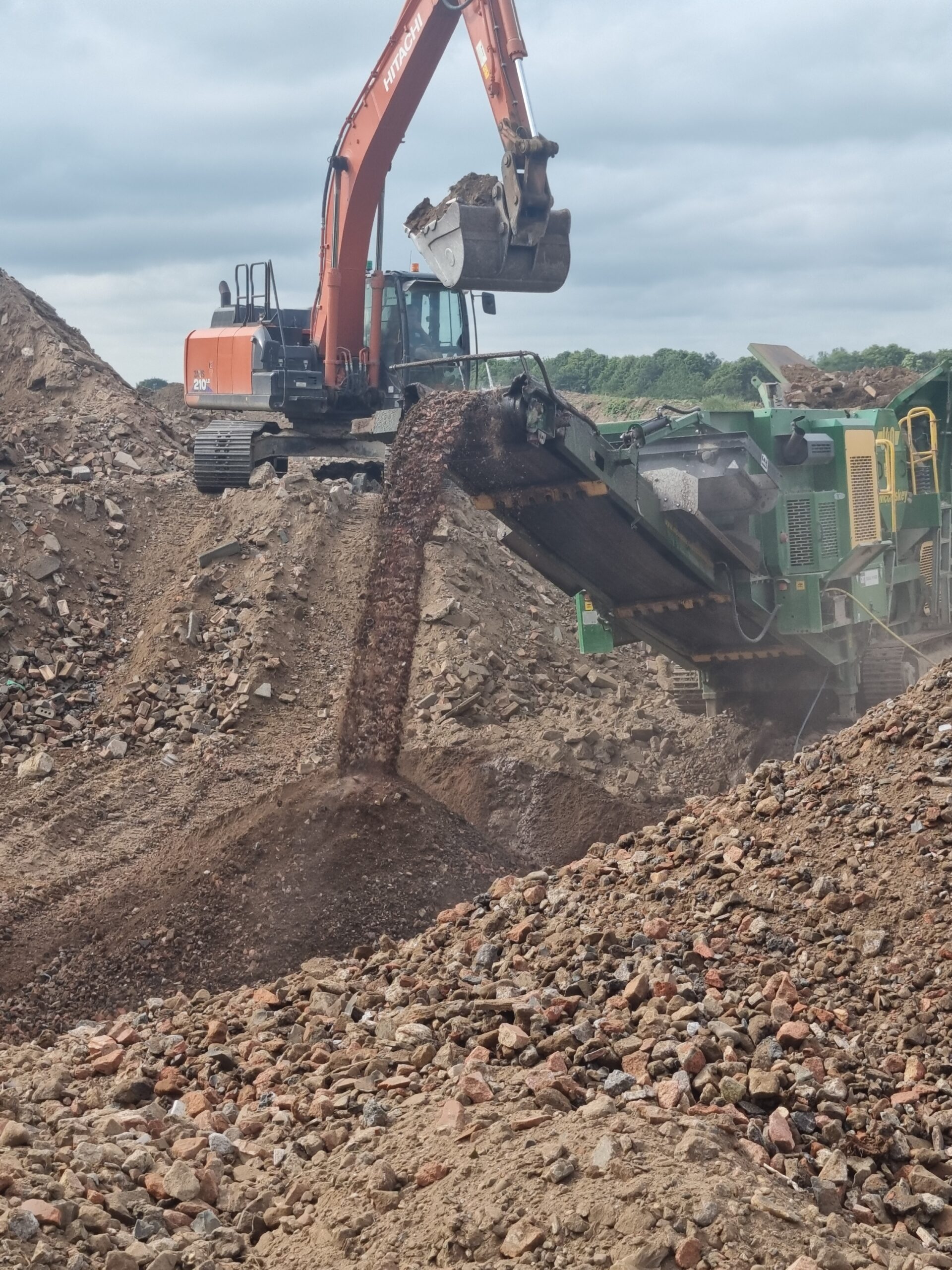
Crushed concrete comes from old foundations, slabs, kerbs and demolished buildings that have been broken down and screened into graded aggregate. The material is processed on site, which means it’s graded to a consistent standard and ready to go without waiting on a third party.
As it’s made from demolition and construction waste, using crushed concrete keeps usable material out of landfill. It’s better for the environment, and generally speaking, kinder on your project budget too.
Common uses
RCA is a versatile, hardy material that turns up on a lot of different project types. Some of the most common uses include:
Sub-base for driveways, car parks and paths: It compacts well, making it a sturdy base layer before a finished surface goes down.
Farm tracks and rural access roads: Handles heavy vehicle traffic and holds up well in exposed conditions, which makes it a popular choice on agricultural land – for farm tracks or bases for stables and barns.
Foundations and groundworks: Used as a fill material where you need bulk and stability, at very little cost compared to other materials.
Temporary site roads and hardstandings: A cost-effective way to keep a construction site moving without financially committing to a permanent surface.
Landscaping and garden projects: Works well as base for patios, outbuildings and other garden structures.
Infill behind retaining walls. Provides drainage and structural support without the cost of virgin aggregate.
Is crushed concrete the same as MOT Type 1?
Not exactly, but they’re closely related. MOT Type 1 is a specification for sub-base material, setting out the standards a material needs to meet for use in construction and highways applications. Two things matter most.
The material must be sized between 40mm and dust, and must contain minimal deleterious material (harmful or contaminating substances). For recycled MOT Type 1, that’s capped at 1%. Meeting those standards is what gives the material its load-bearing strength, makes it compact well and keeps it safe for the environment.
Gamble Plant crushes and screens concrete on site to the MOT Type 1 standard, so you know exactly what you’re getting before it arrives on site.
Is crushed concrete right for my project?
For most sub base and fill applications, it’s a strong choice. Crushed concrete is durable, drains well and compacts reliably under pressure, partly because it’s made up of sand, stone and mortar from the original material. That combination gives it good stability once it’s down.
It’s also one of the most economical aggregate options. Choosing crushed concrete over gravel or virgin stone can save up to 50% on material costs, and because it can be produced on site from existing concrete waste or bought in bulk from a local supplier, you’re not at the mercy of stock availability either.
This mix of strength and permeability makes it useful across applications beyond the obvious sub base work. These include drainage structures, roadways kerbs, retaining walls, landscaping where soil drainage matters, pipe bedding to support water flow, and stormwater management systems. It’s also used for rip rap, which is loosely placed crushed material laid along riverbanks and embankments to protect against erosion.
Where it doesn’t work as well is as a finished surface. Crushed concrete is a base material, so it isn’t practical as a top layer.
It’s also worth knowing that crushed concrete isn’t quite as strong as freshly poured concrete. It’s been broken down and reprocessed, so for structural applications that require a specific load bearing specification, fresh concrete or another aggregate may be more appropriate.
For projects where appearance matters, such as a front driveway or a landscaped garden, crushed concrete tends to sit further down the list. It does the groundwork well, but the finish unusually comes from whatever goes on top of it.
Quality is also worth thinking about. Crushed concrete from a reputable aggregates supplier will be screened, graded and processed to a consistent standard. Material that hasn’t been properly processed can be inconsistent in size and composition which affects how it compacts and performs over time. Buying from a supplier who knows what they’re doing makes a difference.
Popular FAQs
How much does crushed concrete Type 1 cost?
Prices will vary depending on quantity and delivery, but for a loose load you’re generally looking at somewhere between £35 and £60 per tonne. Some suppliers offer bulk discounts, so the more you order, the lower the price per tonne tends to be. As a general rule, it comes in significantly cheaper than virgin aggregate, especially if it’s produced on site.
Does crushed concrete compact well?
Yes, and it’s one of the reasons it’s such a popular sub-base material. The mix of particle sizes means it locks together tightly when compacted, leaving very little void space. That’s what gives it load-bearing strength and stability over time. A plate compactor is the usual tool for the job, working in layers to get an even solid finish.
Can crushed concrete be used in wet conditions?
Yes, within reason. Crushed concrete drains reasonably well due to its composition, and once it’s properly compacted it holds up in wet weather without shifting or breaking down. It’s a common choice for farm tracks and rural access roads in Norfolk for exactly that reason. In very waterlogged or poorly draining ground, you may need to look at additional drainage measures before laying your sub-base, but for most outdoor applications it performs well through the seasons.
Is crushed concrete eco-friendly?
It’s one of the greener aggregate options available. Using recycled concrete diverts demolition and construction waste from landfill, and producing it on site reduces the need for transporting virgin aggregate long distances. It also reduces the demand for quarried materials, which has its own environmental footprint.
How is crushed concrete different from gravel?
They’re both aggregate materials but they behave differently in practice. Gravel is a naturally occurring material, rounded in shape and quarried from the ground. Crushed concrete is a recycled material, angular in shape because of the way it’s been broken down and processed.
That difference in shape is what makes the difference. The angular edges of crushed concrete lock together when compacted, which gives it better stability and load bearing performance. Gravel, in comparison, tends to shift more underfoot and under vehicle traffic, which is why it’s more commonly used as a decorative surface of drainage material than a structural base layer.
Cost is another difference. Crushed concrete generally comes in cheaper than gravel, making it the more economical choice for sub-base and fill work.
Ready to order?
Gamble Plant supplies MOT Type 1 Recycled Crushed Concrete across Norfolk and beyond from our own crushing and screening operation. Orders over 5 tonnes come with free delivery, and bulk pricing means the more you order, the less you pay per tonne, down to as low as £22. Order online or give us a call to talk through what you need.